

Location
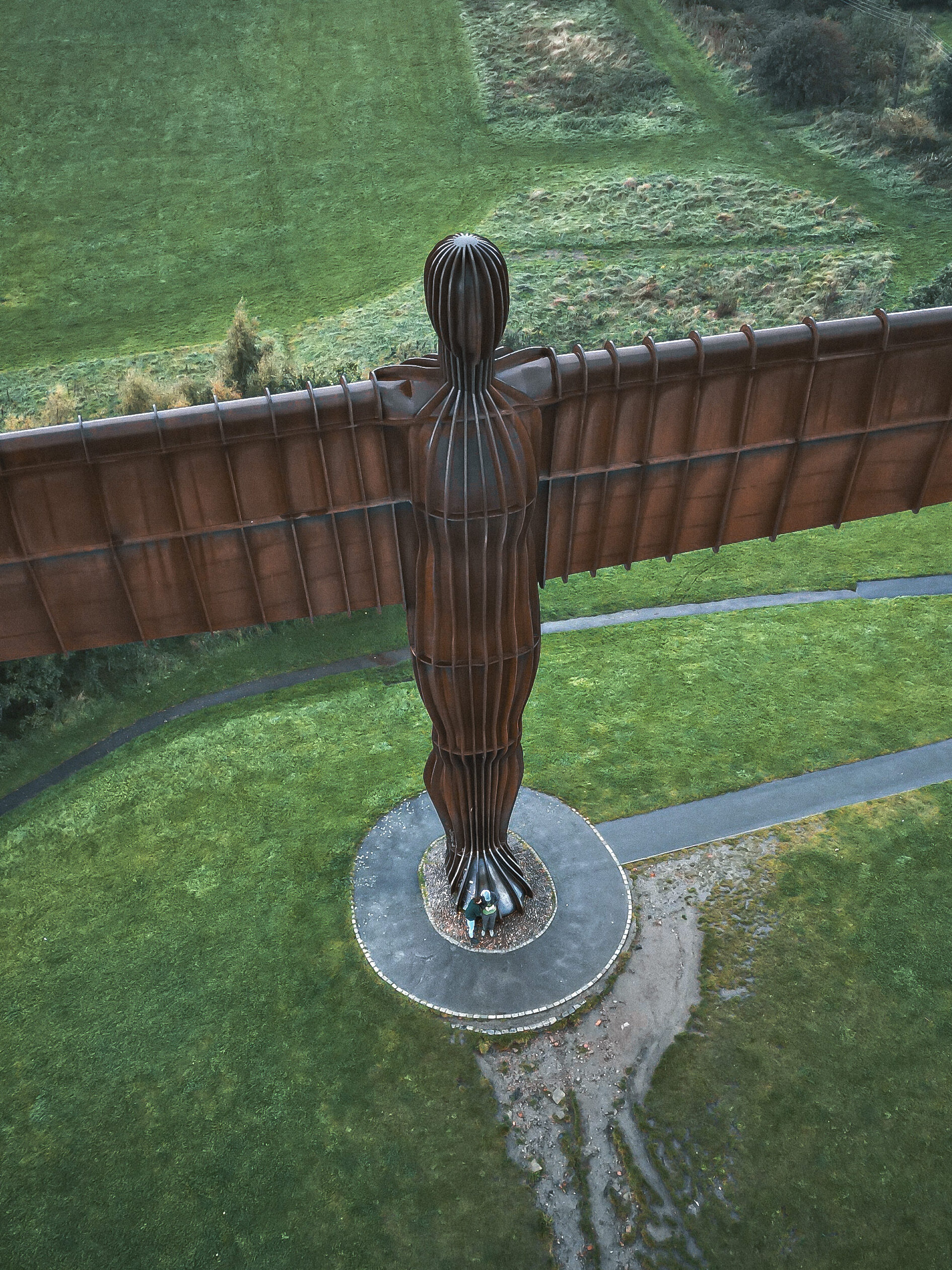
The Angel of the North stands proudly in the heart of Northeast England, near the town of Gateshead. Specifically, it graces the picturesque landscape of Low Eighton, overlooking the A1 motorway, one of the major arterial routes in the region.
Its positioning is deliberate, allowing the sculpture to be visible from afar, both to those approaching from the south and to those flying into or out of nearby Newcastle Airport. This accessibility makes the Angel of the North more than just a statue; it’s a welcoming sentinel, an emblematic figure that greets and bids farewell to countless individuals each day.
Surrounded by rolling hills and the urban sprawl of Gateshead, the Angel of the North has seamlessly integrated into its natural and man-made surroundings.
Parking and Access
There is a car park located in close proximity to the sculpture itself, allowing easy access for all visitors. The park provides spaces for cars, coaches, and disabled parking. Additionally, the parking facilities are maintained to a high standard, ensuring a clean and welcoming environment for all who arrive. The Angel of The North is also very well signposted for ease too!
Amenities
While the Angel of the North itself stands in a serene landscape, there are several amenities conveniently located in the vicinity for visitors to enjoy. Within a short distance, there are cafes and restaurants. Surrounding the state itself is rolling grassland, perfect for a picnic.

Interesting Facts
- The Angel of the North stands at an astounding 20 meters (66 feet) tall and has a wingspan of 54 meters (177 feet).
- This iconic sculpture is constructed from 200 tons of steel. To put that in perspective, it’s equivalent to the weight of about 50 elephants!
- The Angel is made primarily of weathering steel, which develops a rust-like patina over time. This not only protects the structure from corrosion but also gives it a distinctive reddish-brown color.
- The Angel of the North was designed by British sculptor Antony Gormley, renowned for his thought-provoking and monumental artworks.
- It was completed in 1998.
- Gormley intended the sculpture to be a symbol of hope and renewal for the communities of the North of England, particularly those affected by industrial decline.